
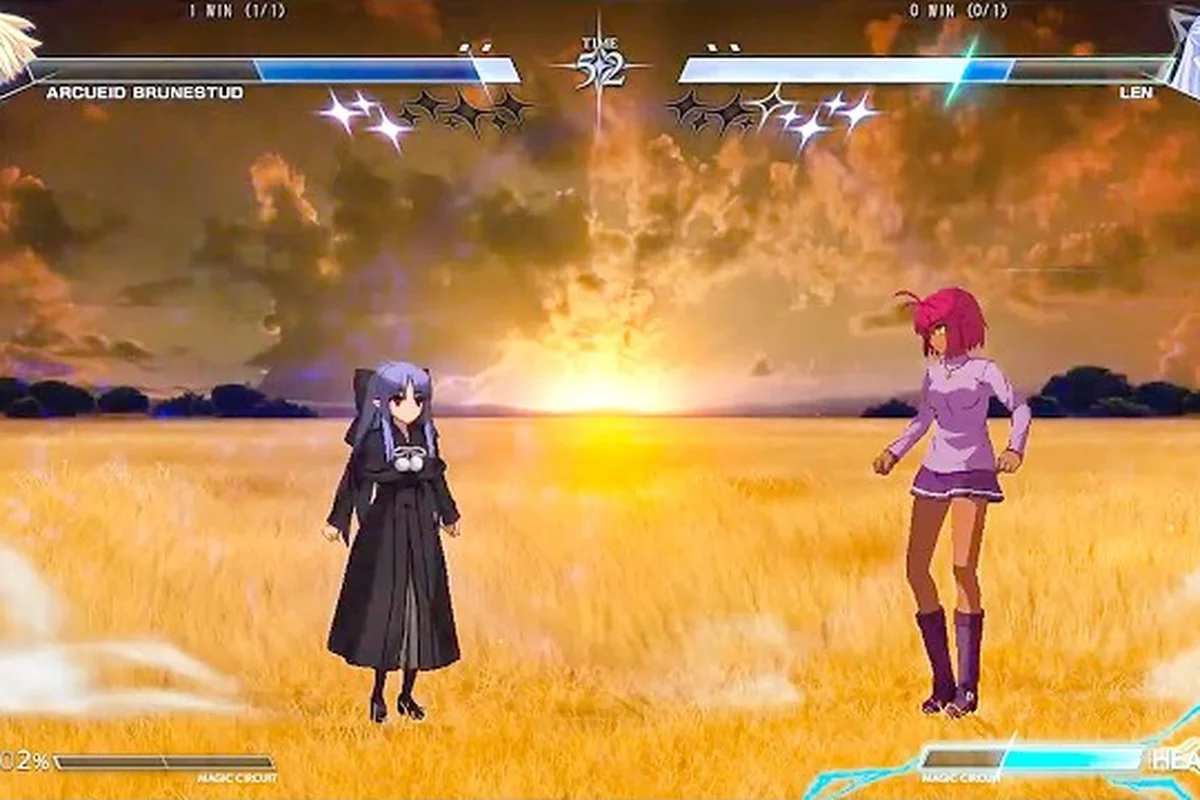
If you cut your teeth on Melty Blood: Type Lumina's neutral skips and Moon Drive extensions, the Twi-Lumina advanced guide exists to keep your reflexes honest. The follow-up entry rewires resource management around a new gauge, splits the control scheme into two deliberate flavors, and reintroduces techniques that change how Type Lumina veterans pressure oki, which is why a fresh mental model matters long before the April 2027 launch.
Lumina Gauge, Rapid Beat Routing, and What Type Lumina Veterans Must Unlearn
The single most important adjustment in this Melty Blood: Twi-Lumina advanced guide is the resource bar. Type Lumina veterans spent four years budgeting Moon Gauge segments to buy Moon Drive activations, EX cancels, and tactical shield breaks. Twi-Lumina replaces that bar with the Lumina Gauge, which Automaton's August 2026 systems report describes as a refilled meter that powers a wider cast of universal actions, including a brand-new pushback technique called Gauntlet. Holding the gauge back for one big payoff is no longer the optimal play, because the meter refills steadily and the new universal options are designed to be used mid-pressure, not hoarded.
Veterans will feel the rhythm shift immediately. The Type Lumina habit of treating EX cancels as a precious, round-ending resource now carries a real opportunity cost, because every EX-scale action pulls from the same Lumina pool that also fuels your pushback and route extension tools. Players who land at the FGO Fes. demo booths (per community reports from the Tokyo Game Show 2026 wishlist campaign) consistently reported that the bar feels more like an aggressive-budget meter than a defensive one, and that pacing EX usage across a round rather than stockpiling it for a single comeback is what separates intermediate play from tournament-grade play.
| Resource | Type Lumina (2021) | Twi-Lumina (April 2027) | Veteran Implication |
|---|---|---|---|
| Resource Bar | Moon Gauge (segmented, 4 stocks) | Lumina Gauge (continuous refill) | Stop saving; spend to threaten |
| Universal Spend | EX cancels, Moon Drive activation | EX cancels, Gauntlet pushback, Rapid Beat route upgrades | One pool, multiple priorities |
| Activated Mode | Moon Drive (time-limited super mode) | Lumina Mode (gauge-driven, layered) | Mode entry cost is now gauge, not stocks |
| Defensive Option | Tactical shield break, spot dodge | Shield break tied to Lumina, Gauntlet pushback replaces hard reads | Defensive reads live in the same budget |
Why the Lumina Gauge Resets Old Habits
Every Type Lumina round boiled down to a math problem: how many Moon Gauge stocks do I burn this neutral exchange? That math is gone. The Lumina Gauge refills automatically through normal play, so the question becomes how do I keep my opponent's Lumina lower than mine, and how do I bait their Gauntlet at the wrong time. According to community testing shared at the FGO Fes. demo stations, the gauge differential in neutral often decides rounds more decisively than the health deficit does, which is the inverse of the Type Lumina meta where life lead tended to dominate late-round decision trees.
Veterans who rely on late-round Moon Drive comebacks will find that the activation condition now eats into the same gauge that fuels their pressure extension tools. That double-dip is intentional, and it rewards players who enter Lumina Mode earlier in a round, when the gauge is full, rather than after weathering a hard knockdown. The behavioral shift from "save for the comeback" to "spend for the conversion" is the first thing this melty blood twi-lumina guide for type lumina players asks you to internalize.
Control Schemes, the Gauntlet Technique, and New Neutral Options
The Melty Blood: Twi-Lumina advanced guide has to talk about input choice, because Twi-Lumina ships with two distinct control schemes rather than a single unified layout. The Act scheme preserves the Type Lumina mapping for legacy muscle memory, while the Duel scheme rebinds specials to a single dedicated button for faster execution, according to Automaton's coverage of the FGO Fes. reveal. Choosing between them is not a flavor question, because each scheme changes which techniques you can threaten in the same number of frames.
| Input | Act Scheme (Type Lumina legacy) | Duel Scheme (new mapping) | Best For |
|---|---|---|---|
| Specials | Motion inputs (quarter-circles, dragon punches) | Single button + direction | Speed, controller comfort |
| EX Moves | Motion + double tap | Dedicated EX button | Faster route upgrades |
| Rapid Beat | 5-hit autocombo (carried over) | 5-hit autocombo with new route branches | Aggressive oki setups |
| Gauntlet | Motion + EX | EX + button | Universal pushback on demand |
The Gauntlet Technique in Practice
The new Gauntlet is the most universally available mid-screen pushback option the series has ever shipped, and it sits in the Lumina Gauge budget rather than character-specific resources. Hitting Gauntlet at the right time sends the opponent tumbling and resets spacing without committing to a slow DP, which is why it has become the new neutral reset tool for the entire cast. The trade-off is that spending gauge on Gauntlet means you cannot spend it on EX route extension that same interaction, so the technique functions as a tempo read, not a panic button.
Type Lumina veterans who relied on character-specific pushback tools (Tohno's 5B push, Arcueid's far C spacing, Akiha's 2C slap) will find Gauntlet slots in as the universal alternative, but with a different risk profile. Because the meter refills, using Gauntlet twice in a round is more viable than using Moon Gauge twice in Type Lumina, but spending it on a read that whiffs leaves you in the same neutral minus state you would have been in if you had just blocked, which is why the technique rewards confident reads over defensive fishing. The technique has not been described as a reversal in any official outlet, so treat it as a spacing tool that happens to push the opponent away, not as a wake-up option.
Rapid Beat's New Route Branches
Rapid Beat, the autocombo system introduced in Type Lumina, is carried over but enhanced. According to Automaton, Rapid Beat routes now include new branch points that let you tag a special or EX move directly into the autocombo sequence, which is a major change from Type Lumina where special-cancelling out of Rapid Beat required a specific input window. Veterans who used Rapid Beat as a one-size-fits-all pressure string will need to learn which branch fits which knockdown, because the new route options reward matchup knowledge over generic pressure.
The practical implication is that Twi-Lumina's combos will run longer on average than Type Lumina's, but only if you commit the route knowledge. The melty blood twi-lumina combos breakdown covers specific BNB routes per character, while this melty blood twi-lumina advanced guide focuses on the system-level reason those combos exist. If your training time is limited, learn the routes for the character you main, then learn the routes for the three or four characters that show up in ranked queues, because the autocombo will only carry you to mid-rank before opponent familiarity exposes the gaps in your route knowledge.
The Returning Cast, New Visuals, and Matchup Implications
Type Lumina's 15-character roster is the foundation of Twi-Lumina, with the cast receiving upgraded character visuals while a new fighter, Len, is added. The official English site lists Len among the new additions, and Automaton's coverage notes that Len is voiced by Ishihara Kaori, which has sparked early community discussion about how the character will integrate into existing matchup knowledge. For Type Lumina veterans, the cast is mostly familiar, but the visual refresh changes telltale animations, frame tell windows, and counter-hit effects enough that you cannot blindly trust your 2021-era reactions on day one.
| Returning Character (Type Lumina) | Visual Refresh Focus | Early Matchup Note |
|---|---|---|
| Shiki Tohno | Idle stance, Nanaya stance tells | Stance entry frames are tighter; old whiff punishes may no longer connect |
| Arcueid Brunestud | Hair physics, far C animation | Aerial arc looks longer; anti-air timing shifts |
| Akiha Tohno | Walk speed, 2C slap range | 2C reach is the same, but recovery frames may differ |
| Hisui / Kohaku | Maid stance tells, item toss arcs | Item toss arcs appear higher; jump-in whiff punishes open up |
| Len (new) | First impressions from FGO Fes. demo | Voice and stance only; full frame data not yet published |
What Visual Refreshes Actually Change
The visual refresh is not a cosmetic-only upgrade. Automaton's coverage of the August 2026 reveal and the Type Lumina Wikipedia entry on the predecessor both point out that animation tells determine matchup knowledge in 2D fighters, and Twi-Lumina's refreshed tells mean the year-four Type Lumina matchup chart is partially obsolete on day one. For a Type Lumina veteran who knows, for example, that Arcueid's standing C has a 17-frame startup, that frame data is expected to carry over, but the visual tell that signals it is about to come out may now be different, because the refreshed animation has new particles and a different foot plant. The melty blood twi-lumina cast comparison resource tracks the new animation tells per character, while this melty blood twi-lumina advanced guide focuses on the meta-level adjustment: plan to lab your main and your top three matchups on day one, because auto-piloted reactions will betray you.
The refreshed visuals also affect counter-hit reactions, which in Type Lumina were a major source of combo extension. If the new counter-hit effects include a longer hitstop or a different screen shake, the windows for confirming counter-hit routes will shift, even if the underlying frame data is identical. Community testing from the FGO Fes. demo stations suggested the counter-hit windows feel different in practice, even when the frame numbers appear unchanged, which is why lab time on day one matters more than a frame data spreadsheet alone.
How the New Character Fits the Existing Meta
The new character, Len, is the unknown variable. With the April 2027 launch approaching, full frame data and a complete move list are not yet published as of this writing, and Automaton's coverage only confirmed voice casting and character presence. For Type Lumina veterans, the right approach to Len is to treat them as a closed beta opponent for the first month of ranked play, which is when the wider player base is still gathering data and individual players can climb by learning one matchup quickly. The melty blood twi-lumina type lumina cast breakdown covers the returning roster in detail, but the meta on Len will only firm up after ranked launches, so do not invest heavily in tier-list predictions for the new face until the community has matchup footage to work with.
Meta Shifts, Ranked Strategy, and the Veteran Transition Plan
This Melty Blood: Twi-Lumina advanced guide is built around the assumption that the reader already plays at a mid-to-high level in Type Lumina. With that baseline, the meta shifts that matter most are not beginner-level execution fixes, but the invisible ones: when to spend, when to hold, when to enter mode, and when to take the throw. The four-year-old habit of saving Moon Gauge for a round-ending activation is the single biggest trap for veterans, and the Lumina Gauge's continuous refill makes that habit actively costly. Veterans who make the early adjustment will climb the melty blood twi-lumina ranked guide ladder faster than those who do not.
| Veteran Habit (Type Lumina) | Twi-Lumina Reality | Adjustment Required |
|---|---|---|
| Save Moon Gauge for round 3 | Lumina refills; spend early to control tempo | Train round-1 EX usage |
| Moon Drive = comeback tool | Lumina Mode enters off a full bar; entry cost shared with pressure | Enter mode mid-round, not late |
| Character-specific pushback only | Gauntlet is universal; spend gauge to access | Read the opponent's spacing before committing |
| Autocombo pressure is generic | Rapid Beat has new branch points; route knowledge wins | Lab each character's autocombo branches |
| Matchup tells are stable | Visual refreshes shift animation tells; frame data may stay the same | Re-learn the tells, keep the frame data |
A Practical Week-One Practice Plan
For Type Lumina veterans with limited time, the most efficient first-week plan looks like this. Day one should focus on the Lumina Gauge economy in training mode, specifically practicing the round-1 EX spend that Twi-Lumina's resource model rewards. Day two should be spent in the training room re-learning the visual tells for the character's main matchups, because the animation refresh will betray you if you autopilot. Day three should focus on Gauntlet timing, which means practicing the spacing windows where Gauntlet beats common neutral tools, and the spacing windows where it whiffs into a punish counter. Day four should be spent in ranked, because the early ladder is where the meta is still soft and a well-prepared veteran can climb before the wider player base catches up. Day five should be spent reviewing replays, because at advanced levels the meta is decided in the round-two and round-three transitions that the moment-to-moment action obscures, and replays make those transitions visible.
The system mechanics behind Lumina Mode, the Gauntlet technique, and the new Rapid Beat routes are detailed in the melty blood twi-lumina tech list, which complements this Melty Blood: Twi-Lumina advanced guide by going deeper into the universal options. Together, the two resources should cover both the why and the how of the new meta, which is the full transition package a Type Lumina veteran needs to make the switch without losing rank. The official MELTY BLOOD: TWI-LUMINA Steam page carries the platform list and pre-order details, while the official English site hosts the latest character reveals and the announcement that the game launches April 22, 2027 on PS5, PS4, Switch 2, Switch, Xbox One, and Steam.
The Twi-Lumina release date trailer from the official TYPE-MOON channel is a useful visual reference for the refreshed animations if you want to start training your eyes before the April 2027 launch. The meta will firm up in the weeks after release, and the melty blood twi-lumina what changed conversation will move fast, so the best time to install the new mental model is now, while the player base is still calibrating.
Frequently Asked Questions
What is the most important system change for Type Lumina veterans in Twi-Lumina?
The Lumina Gauge is the biggest adjustment, because it replaces Type Lumina's segmented Moon Gauge with a continuously refilling meter that fuels EX cancels, the new Gauntlet pushback, and Lumina Mode activation from the same pool. Veterans used to saving Moon Gauge for round-three comebacks will need to retrain their spending habits early, because hoarding the Lumina Gauge undercuts pressure and route extension in the same round.
Do I need to re-learn my main character's matchups in Twi-Lumina?
Partially. Frame data is expected to carry over from Type Lumina, but the visual refresh changes animation tells and counter-hit reactions enough that auto-piloted reactions will fail on day one. Plan to lab your main and your top three matchups in training mode before jumping into ranked, because the matchup knowledge that took four years to build in Type Lumina is partially obsolete until you re-learn the new tells.
Is Gauntlet a defensive reversal?
No official outlet describes Gauntlet as a reversal. According to Automaton's systems report, Gauntlet is a universal pushback technique that spends Lumina Gauge to send the opponent tumbling and reset spacing. It is a tempo read and a neutral reset, not a wake-up option, so using it as a panic button will leave you minus on whiff.
Should I use the Act or Duel control scheme as a Type Lumina veteran?
Act preserves the Type Lumina motion inputs and is the easier transition for veterans, while Duel rebinds specials to a single button for faster execution but rebuilds muscle memory. If you are switching mid-ranked-season, Act is the lower-friction option, because the cognitive cost of relearning inputs will compound with the meta adjustment. If you are starting fresh in a new season, Duel may be worth the lab time, because the execution speed gain compounds with every match.
How does the new character Len affect the early meta?
Len is the new addition, voiced by Ishihara Kaori, and full frame data is not yet published as of this writing. The right approach is to treat Len as a closed-beta opponent for the first month of ranked play, focusing lab time on the rest of the roster first and gathering matchup data from opponents rather than theorycrafting tier-list predictions.