
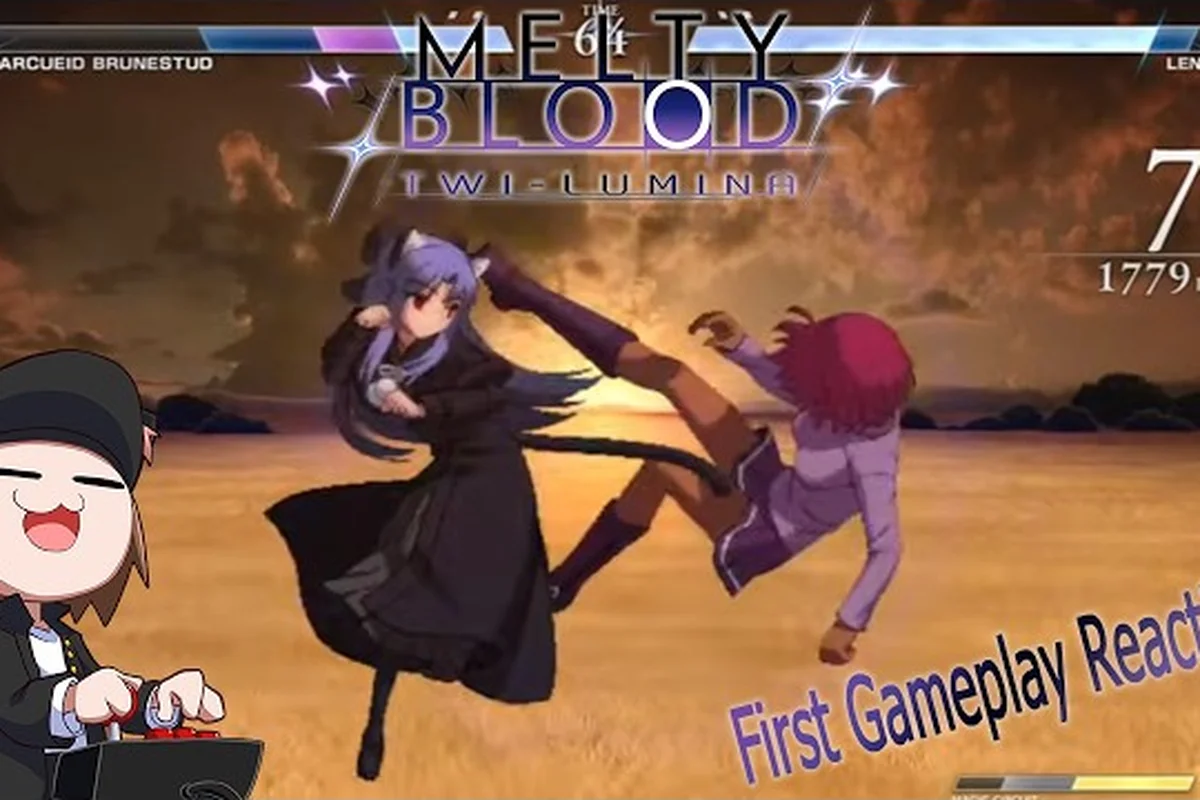
Launching an opponent in Melty Blood: Twi-Lumina and watching them bounce across the screen feels great, but converting that opening hit into a full combo demands a precise understanding of the juggle system. Every aerial hit in this fighting game is weighed against an invisible gravity scale, and the value of each follow-up shrinks the longer your victim stays airborne. Mastering the Melty Blood: Twi-Lumina juggle system means reading those numbers in real time, picking the right OTG pickup the instant they hit the ground, and recognizing when a stun route will out-damage a standard launch string.
The system's depth comes from the way air hit decay, okizeme, and the stun system all interlock. A counter hit can extend your juggle window by giving you extra hitstun, and the right wakeup option from your opponent can punish an over-extended combo with an invincible reversal. Once you understand how each layer feeds the next, the Melty Blood: Twi-Lumina juggle system stops feeling like a memorized list and starts reading like a live conversation between you and the falling opponent.
How Air Hit Decay Shapes Every Launch
Air hit decay is the invisible timer that runs the moment your combo leaves the ground. Every airborne attack in Twi-Lumina carries a hidden multiplier that decreases with each successive hit, and once the multiplier crosses a threshold, the opponent enters an untechable state where they simply drop to the floor without an animation. Community testing across the Melty Blood: Type Lumina predecessor, on which Twi-Lumina is built, has mapped most of these values, and the patterns carry forward into the new title according to the official Type Lumina how-to guide.
The decay curve has three working zones that every juggle player should memorize. Knowing which zone you are in determines whether to extend high, convert low, or simply cash out.
| Zone | Hit Multiplier Range | Player Action | Risk Level |
|---|---|---|---|
| Prime | 100% to 70% | Spend big launchers, Moon Skill, super cancels | Low — opponent is still techable, combos stay flexible |
| Sliding | 70% to 40% | Use ground bounces, chains, light normals to stall | Medium — wrong pick sends them flying out of range |
| End | 40% and below | Set up OTG or accept the drop | High — heavy attacks can miss, OTG pickup timing tightens |
A common launch in the Melty Blood: Twi-Lumina juggle system starts with a 2C launch hit that hits at roughly 100% scaling. Your second attack, usually a 5B or a special cancel, lands while the multiplier sits around 85%. By the third hit, the curve has often dropped below 70%, and that is the cue to start considering whether to commit gauge into a Moon Drive extension or to chain into a launcher that resets your air momentum.
Reading the Multiplier Without a Trainer Display
The game does not show the decay value on screen during a real match, so reading it becomes a feel-based skill. One reliable signal is the opponent's falling speed. When they start dropping noticeably faster between your hits, you have crossed from the Prime zone into Sliding. Another signal is the way their tech animation behaves. If they tech in the air as soon as you land a hit, you are still in Prime territory. If they fall straight into a hard knockdown without the ability to air tech, you are deep in End territory and should be planning the OTG.
How Counter Hits Extend the Window
The Melty Blood: Twi-Lumina counter hit system adds hitstun to the opponent on the very first hit of a trade, which means that a counter-hit launch effectively gives you one extra frame of juggle time. That single frame matters because it can keep your opening air combo inside the Prime zone for one more hit, and in some cases that extra hit is the difference between a 40% combo and a 55% route. This is why high-level players fish for counter hits before committing to their big launchers — the extra stun softens the early decay and lets the juggle breathe.
OTG, Ground Bounces, and Pickup Timing
The instant the opponent touches the floor, your juggle options collapse into a very short list. The Melty Blood: Twi-Lumina juggle system gives you roughly six frames to perform an OTG (off-the-ground) hit before the opponent's wakeup options become available, and the rest of your combo must begin from that pickup or from a hard knockdown setup. This is where the system punishes greed. Drop the OTG and you are starting your next combo from neutral; land it cleanly and you can roll straight into a meaty oki setup.
| OTG Option | Input | Best Use Case | Damage Tier |
|---|---|---|---|
| 2A | Tap A after landing | Quick pickup, chain into BnB | Low — reliable, safe |
| 2B | Tap B after landing | Slightly higher lift, sets up rejump | Medium — works on most weights |
| 5C | Tap C after landing | Heavy pickup, can launch again | High — but consumes more frames |
| Special cancel OTG | 623B-style after landing | Stylish pickup into super route | Variable — depends on character |
The 2A is the safest pickup in the Melty Blood: Twi-Lumina juggle system because its hitbox is low and wide, but it does not lift the opponent very far, which limits your follow-up. The 2B pickup gives a more comfortable height and chains into most standing normals, making it the community-preferred option for a standard BnB. The 5C pickup is reserved for characters with enough damage to justify the extra frame cost, and the special cancel pickup is mostly a flair choice that only pays off if you have the gauge and a clear read on your opponent's wakeup options.
Grounding the Bounce
Ground bounces in Twi-Lumina behave differently from the standard soft knockdown. After a hard ground bounce, the opponent enters a brief tumble state that lets you chase with a forward dash and pick up with a 5B or 5C. The catch is that ground bounces carry a built-in decay penalty on the very next hit, so chaining a heavy normal off a ground bounce will often look like it should combo but will leave the opponent just outside your follow-up range. The community-recommended fix is to use a 5B into a 2B chain after a ground bounce, which both controls the spacing and keeps the chain scaling readable.
Stun Routes and the Counter Hit Connection
The Melty Blood: Twi-Lumina stun system is what lets long combos become tournament-viable because it gives the combo player a clean path to a hard knockdown plus an oki setup rather than leaving the opponent with a techable mid-air state. Stun in Twi-Lumina is built up through repeated hits, and the bar fills faster on counter hits and on the first hit of a combo, which is why counter-hit fishing is so central to high-level play.
| Stun Source | Stun Added | Combo Stage | Strategic Value |
|---|---|---|---|
| Counter hit | 18 | Opener | High — single hit can be enough to set up launch |
| Normal hit in neutral | 8 | Mid combo | Low — small, only meaningful over many hits |
| Special move | 12 | Mid combo | Medium — combos well with high-hitstun normals |
| Super | 25 | Combo ender | High — often the hit that triggers the stun state |
A typical counter hit route begins with a 2B into 5C launch, which gives you the 18 stun from the counter hit plus the 12 stun from the 5C, putting the opponent at 30 stun before the first aerial hit lands. From there, a simple two-hit air combo plus a special move can push them past the 50-stun threshold and into a stunned state. Once stunned, the opponent cannot tech and cannot interrupt, which means your juggle becomes an automatic conversion into maximum damage.
Why Stun Beats Pure Damage
A combo that deals 45% damage but leaves the opponent techable on the ground is often worth less than a combo that deals 38% and ends in a hard stun. The Melty Blood: Twi-Lumina juggle system rewards the second option because the hard stun gives you a free oki setup, which in turn lets you run your wakeup options offense. The damage deficit from the shorter combo is recovered on the next interaction, and often exceeded, because the opponent is forced to block a meaty or to gamble on a reversal.
Wakeup Options and Invincible Reversals
Once your opponent is on the ground, their defensive toolkit matters as much as your juggle damage. The Melty Blood: Twi-Lumina wakeup options include standard rise attacks, a back-roll that creates distance, a forward roll that can be used as a high-risk mixup tool, and a dedicated invincible reversal. Reading the right response to each option is the second half of the juggle system because even a perfect combo can be undone by an opponent who guesses your oki setup correctly.
| Wakeup Option | Invincibility | Frame Data on Hit | Counter Strategy |
|---|---|---|---|
| Rise attack (5A) | None | 7 startup, safe on block | Meatied, low reward |
| Forward roll | None | 22 recovery | Frame trap with 2B, punish on read |
| Back roll | None | 28 recovery | Whiff punish with dash 5C |
| Invincible reversal (Moon Drive 214C) | Full startup invuln | 9 startup, big damage | Bait and punish, or block high |
The Melty Blood: Twi-Lumina invincible moves in the wakeup category are the Moon Drive 214C and the super flash reversals, both of which carry full startup invincibility and can punish an over-eager meaty. The trade-off is that invincible reversals are always negative on block and consume a chunk of your meter, so they are most often used as a read against repeated oki pressure rather than as a default option. Baiting one is straightforward: whiff a meaty normal and block on reaction, then punish with a 5C into your best launcher.
Spacing the Meaty
A meaty that hits the opponent one or two frames after their wakeup rise will trade with their 5A and either win cleanly or at worst trade favorably. Spacing that meaty slightly farther back turns the trade into a whiff, because the wakeup 5A is short-ranged, and gives you a free punish. The Melty Blood: Twi-Lumina juggle system rewards this kind of micro-spacing because the follow-up punish from a spaced meaty is usually a full combo, while the follow-up from a traded meaty is often a single hit before your opponent escapes.
Okizeme and Conversion Routes
Okizeme is the final layer of the juggle system, and it is where many players leave damage on the table. A clean Melty Blood: Twi-Lumina okizeme setup turns the end of one combo into the start of the next, either by forcing a guess between high and low, by layer-ing multiple meaty timings, or by running an unreactable mixup that only a hard read can stop. The system's design means that oki is a natural extension of the juggle, not a separate skill, and a strong juggle player should be planning the oki while the opponent is still falling.
| Oki Pattern | Setup | Opponent's Guess | Conversion Value |
|---|---|---|---|
| Meaty 5C | After hard knockdown, dash 5C on wakeup | Block or reversal | High — leads to high-damage combo on hit |
| Empty jump low | Jump, land, 2A on wakeup | Stand or crouch | Medium — works once, then expected |
| Cross-up | IAD over, meaty on other side | Left or right | High — hard to react |
| Meat-throw | Dash, throw on wakeup | Reversal or block | Medium — beats blocking, loses to reversal |
Running cross-up okizeme in the Melty Blood: Twi-Lumina juggle system requires a forward air dash that places your hitbox on the opposite side of the opponent just as they rise. Most characters can convert a cross-up into a launch on hit, which means the opponent must block the cross-up and the meaty in sequence, then guess correctly on the throw or low follow-up. Done correctly, a single juggle can lead into two or three additional interactions, and the cumulative damage easily surpasses 70% before the opponent has a real chance to fight back.
Building a BnB from the Juggle End
A standard BnB in Twi-Lumina starts with a counter-hit 2B into 5C, picks up the launch with a j.B or j.C, then chains into an OTG 2B, a ground bounce, and a meaty 5C for the oki. The Melty Blood: Twi-Lumina juggle system rewards this structure because each step hands off cleanly to the next, and the combo ends in a state where the opponent has no good answer. Variations on the BnB let you spend gauge for damage, or skip the second air hit to keep the oki ambiguous, which gives you a tool for every meter state and every opponent tendency.
Reading the Opponent's Defensive Habits
The hidden layer of the juggle system is your opponent's mental model. Players who are stuck in a defensive pattern will rise on the first frame every time, which lets you meaty them with a 5C for free. Players who are scared of meaty 5C will start back-rolling, which lets you whiff-punish with a dash 5C. Players who are scared of dash 5C will start invincible-reversaling, which lets you bait and punish. Each of those reads costs the opponent meter or frame advantage, and the cumulative effect across a match is what separates a strong juggle player from an average one.
| Opponent Habit | Your Punish | Damage Outcome |
|---|---|---|
| Rise 5A on wakeup | Meaty 5C, combo | Full BnB |
| Back roll on wakeup | Dash 5C on read | Whiff punish into combo |
| Forward roll on wakeup | Frame trap 2B into 5C | Combo or hard reset |
| Invincible reversal | Block, 5C punish | Counter-hit combo |
A good way to build the read is to pay attention to the very first oki interaction of the match, because most players reveal their default wakeup option early. The Melty Blood: Twi-Lumina juggle system gives you a lot of freedom to switch between oki patterns, so once you have the read, you can apply pressure that the opponent does not have a clean answer for. If you want to expand this into the broader combo system, the punish combo training reference walks through how to convert a confirmed hit into a full route.
Practical Training Path
Putting all of this together takes deliberate practice, and the fastest path is a structured training routine. Spend a session on launch and air decay alone, then add OTG timing, then add the oki layer, then run the whole chain against a recording of a real opponent. Each layer feeds the next, and skipping ahead is how players end up with a memorized BnB that breaks the moment the opponent does something unexpected.
| Training Block | Duration | Focus | Success Marker |
|---|---|---|---|
| Launch and air decay | 20 minutes | Land 3-hit air combo on every launch | Consistent 100% to 70% zone usage |
| OTG pickup | 15 minutes | Hit 2B OTG on every hard knockdown | 95% pickup rate |
| Stun route | 20 minutes | Trigger stun with a counter hit 5C | 80% success rate from CH 2B |
| Oki mixup | 20 minutes | Land one meaty or throw per attempt | 70% conversion on wakeup |
| Live match review | 30 minutes | Apply juggle in real matches | Two juggles per match minimum |
The Melty Blood: Twi-Lumina juggle system rewards repetition because every layer is a skill you can drill in isolation, and the muscle memory transfers directly into match play. Players who run a routine like this for a week almost always see their average combo damage jump by 10 to 15 percent, and their oki pressure becomes noticeably more threatening. To dig deeper into specific character move lists and which moves serve as the best launchers and OTG pickups, the Arcueid move list reference is a useful place to start comparing specific options. Air routes inherit their logic from the older engine, so GameSpot's archive entry on the predecessor doubles as a crash course in why these juggle paths decay the way they do.
Frequently Asked Questions
What is the easiest launcher to start learning the Melty Blood: Twi-Lumina juggle system?
The 2B into 5C route is the most beginner-friendly launcher because both hits are accessible from a crouching confirm, and the 5C launch gives a tall, slow arc that leaves time to think about air follow-ups. Most characters can convert this opener into a clean 2B OTG into a BnB, which is exactly the chain the juggle system is built around. Practicing this single route for a week will build the muscle memory for every other launcher in the game.
How does the Melty Blood: Twi-Lumina counter hit system change a juggle?
A counter hit adds a small chunk of hitstun to the very first hit of a trade, which effectively shifts the entire air combo one hit into the future on the decay curve. In practice, that means a counter-hit launch keeps your second air hit in the Prime zone instead of the Sliding zone, which is often the difference between a 50% combo and a 60% combo. The bonus is even bigger on counter-hit 5C because the extra hitstun lets you add a third air hit that would otherwise drop.
What are the safest Melty Blood: Twi-Lumina wakeup options against a meaty?
The safest defensive wakeup options are the back roll, which creates distance and avoids meaty pressure, and the rise attack 5A, which trades with most meaty normals and lets you reset to neutral. Forward rolls are higher risk because the recovery is long, and invincible reversals are high-reward but high-cost. Against a patient player who spaces their meaty, the back roll is usually the best long-term option because it denies the combo entirely.
How does the Melty Blood: Twi-Lumina stun system interact with okizeme?
The stun system lets a long combo end in a hard stun that forces the opponent into a wakeup state where they cannot tech and cannot interrupt, which is the perfect setup for okizeme. A clean counter-hit route that triggers stun will hand you a free meaty 5C on the very next wakeup, and that meaty is the entry point for your oki mixup. The combination is so strong that most high-level juggle players plan their entire route around reaching the stun threshold rather than chasing raw damage.
When should I use an invincible reversal on wakeup in Melty Blood: Twi-Lumina?
Save the invincible reversal for the moment your opponent has clearly committed to a meaty pattern, because the reversal only works if it trades with the meaty on the earliest possible frame. Using it randomly will mostly just give the opponent a free combo, while using it as a hard read on a repeated oki will often turn the round around. Pair the reversal read with a quick block on the previous oki so you can confirm the opponent's habit before you commit.