
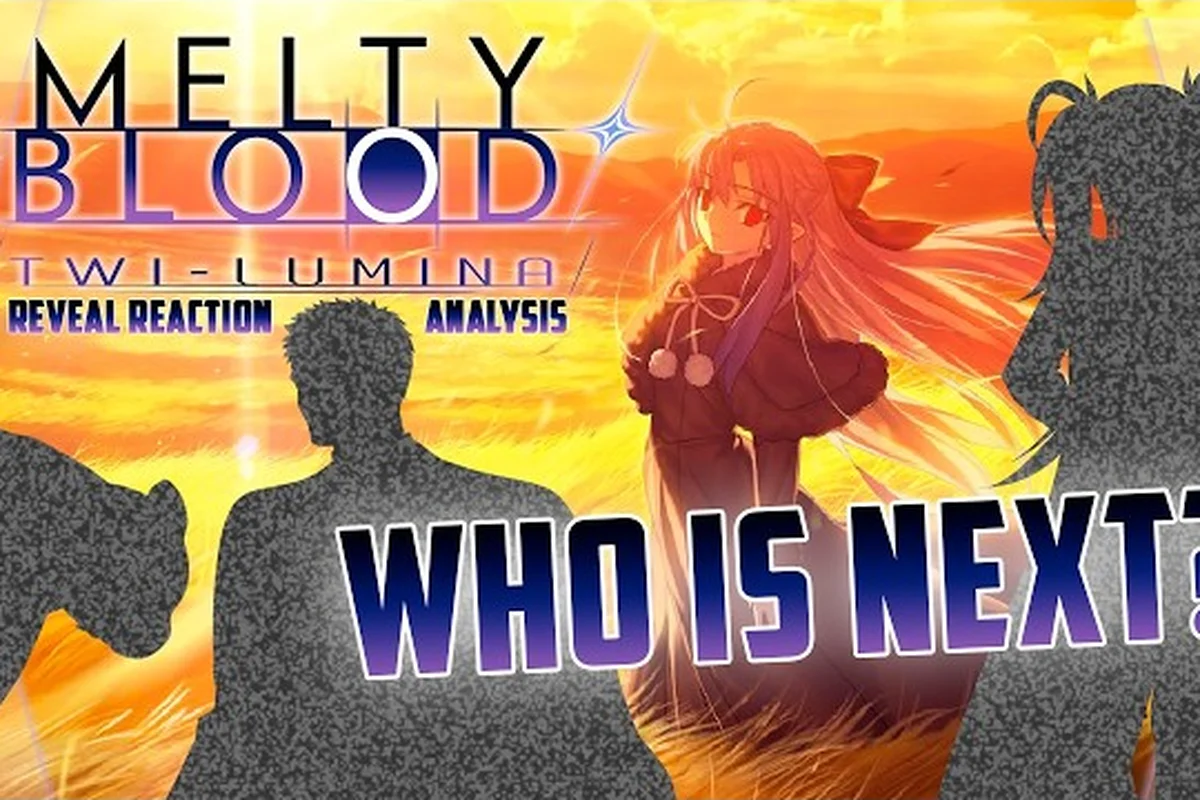
Picking the wrong Melty Blood: Twi-Lumina game mode on launch night can bury the best part of the experience under hours of menu-hopping, which is why this tour walks every mode end-to-end before you ever press start. French-Bread's Tsukihime Remake-era fighter ships with the most ambitious single-player offering the sub-series has ever seen, and the campaign is now fully voiced rather than CG-illustrated, so the order you play things actually changes how the story lands. Whether you came in for the Shiki Tohno reboot, the Souya City setting, or the new Lumina gauge, the table below is the shortest path through the seven modes on offer.
Grand Scenario Mode: The New Flagship Campaign
Grand Scenario Mode is the single biggest addition to Melty Blood: Twi-Lumina's game modes lineup, and it is the obvious first stop for any player who touched the Tsukihime Remake. According to the Noisy Pixel TGS reveal coverage, the mode is the first time the Melty Blood sub-series has a story mode on the same narrative scale as the visual novel it spins off from, replacing the still-image CG storytelling of Type Lumina with fully voiced dialogue. Community reporting from Saiga NAK's TWI-LUMINA roundup puts the total recorded script at roughly five to seven days' worth of spoken lines, all written by Kinoko Nasu himself. That authorial continuity matters because every route branches from the same Souya City setting, and the new dialogue is what differentiates Grand Scenario from the older Act Mode that shipped with Type Lumina.
Story Structure and Route Order
The campaign is built around Souya City as the central hub, with each route covering a different character arc that loops back through the same nighttime geography. Players who want a clean narrative read should start with the Shiki Tohno route, since the protagonist's perspective sets up the supernatural framework that every other route riffs on. The Arcueid route follows as a natural second run, then Hisui, Kohaku, and the unlockable Tohno Akiha scenario, which locks until you have cleared at least two prior routes. The final unlockable route is reserved for the new antagonist introduced for this entry, and community datamines suggest it requires a specific mid-campaign choice in the Shiki route to appear in the chapter select.
| Route | Recommended Play Order | Unlocks After | Approx. Runtime |
|---|---|---|---|
| Shiki Tohno | 1st | None (default) | ~3 hrs |
| Arcueid Brunestud | 2nd | Shiki route clear | ~3 hrs |
| Hisui | 3rd | Arcueid route clear | ~2.5 hrs |
| Kohaku | 4th | Hisui route clear | ~2.5 hrs |
| Tohno Akiha | 5th | Two route clears | ~2 hrs |
| Antagonist (New) | 6th | Shiki mid-campaign flag | ~3 hrs |
Combat Encounters and the Lumina Gauge
Grand Scenario is not a visual novel with the fighting stripped out; the dialogue scenes are punctuated by scripted fights that use the same engine as Versus Mode, so practicing in the campaign directly trains your ranked muscle memory. Each scripted fight rewards Lumina gauge stars, a star-shaped resource sitting below the health bar that powers the new Gauntlet technique. The Gauntlet is a high-damage extension chain that consumes three of the seven available stars by default, and it lands on normal hit confirm rather than requiring a hard read. Community testing notes that bosses in the late Shiki route can be safely burst down with two well-timed Gauntlet activations if you save the gauge from earlier skirmishes, which makes routing a fight feel closer to a Soulslike resource fight than a traditional anime fighter round. The mode also introduces scripted mid-fight dialogue branches, where landing a specific move opens a unique voice line that does not fire in Versus Mode, which is one of the bigger draws for lore-focused players.
Story Mode vs. Grand Scenario: How They Differ
If you played Type Lumina, your mental model of a Story Mode is the per-character Act Mode, a 20-to-30-minute CG-illustrated walkthrough per fighter, and the first reflex on launch will be to assume Twi-Lumina repeats that structure. The new entry's main story is Grand Scenario, and Act Mode is still in the game but functions as a quick lore primer for each individual fighter rather than a replacement campaign. Understanding the split is the single biggest time saver on day one, since the two modes share the same engine but serve completely different goals for the player.
| Attribute | Grand Scenario Mode | Act Mode (Per-Character) |
|---|---|---|
| Author | Kinoko Nasu (full script) | Standard character intros |
| Voiced Lines | ~5-7 days of recorded dialogue | 20-30 minutes per character |
| Story Scope | Souya City-wide branching routes | Single-fighter vignette |
| Visual Presentation | Full voice acting, animated portraits | CG stills with text boxes |
| Unlock Requirement | Default | Default, but expanded after Grand Scenario clear |
| Ideal Player | Lore fans, visual novel readers, Tsukihime Remake readers | Quick character taste, fighting-game-only players |
| Approx. Total Runtime | 15+ hours across all routes | ~3 hours total for all characters |
For a clean first night, most players will want a one-two punch of clearing the Shiki Tohno Grand Scenario route and then dipping into Act Mode for the new Shiki moveset, which is the cleanest way to see the gameplay overhaul and the new projectile. The story mode walkthrough order in this entry really is that simple: Grand Scenario first, Act Mode second, Versus Mode third.
Versus Mode, Ranked, and the Offline Ladder
Versus Mode is the core sandbox where every other system is stress-tested, and the Melty Blood: Twi-Lumina game modes roster leans on it heavily. Local versus supports up to two players on a single console, while the online suite rolls Versus, Ranked, Casual, and Lobby play under a single matchmaking umbrella. Ranked uses the same star-style rating that appeared in Type Lumina, starting every new account at the bottom of the ladder and pairing you with the closest-rated opponent in your region.
| Online Queue | Ranked Consequences | Best Use Case |
|---|---|---|
| Ranked Match | Rating changes, placement matches | Competitive grind |
| Casual Match | No rating, disconnect penalties | New character learning |
| Player Match (Lobby) | Host-controlled, no rating | Friends, tournaments, long sets |
| Training Match (private) | No opponent rating impact | Combo practice, frame data |
Rollback Netcode and Match Quality
French-Bread has confirmed rollback netcode for the online suite, with a default rollback window of eight frames that can be toggled in the network settings menu. Community reports from the TGS 2026 build flagged occasional desyncs on wireless connections, which is expected for the pre-release code, and the developer has stated that the launch build will ship with an updated rollback window. Ranked matches are limited to three rounds with a 60-second timer, while Player Match lobbies can be set to first-to-five or first-to-seven for longer sets. Players who want to warm up before dipping into ranked should run five to ten Casual matches first, since Casual uses the same matchmaking logic but does not penalize disconnects, which makes it the cleanest place to test a new team without burning rating.
Local Versus and the Replay Tool
Local Versus is not a vestigial feature this time around; the new Lumina gauge and Gauntlet mechanic change how neutral plays out, so even solo players will want to spend an hour in local matches to internalize the new resource. Every local and online match auto-saves a replay file, accessible from the Versus Mode menu under the Replay tab, and the replay tool allows you to step back frame-by-frame and check the input log for both sides. The replay tool is the fastest way to learn matchups without a second human in the room, since you can save a Ranked loss, open the replay, and inspect exactly which move opened you up.
Score Attack, Time Attack, and Survival
For players who want single-player content that is not narrative, the three challenge modes under the Arcade umbrella are the cleanest alternatives to Grand Scenario. Score Attack assigns a point value to every move and rewards higher scores for longer combos, Time Attack tracks how fast you can clear a fixed CPU gauntlet, and Survival throws endless opponents at you until your health bar is empty. These are also the modes that push the new Lumina gauge into territory the campaign does not, since the leaderboard rewards any player who can chain Gauntlet activations across multiple opponents in a single run.
| Mode | Goal | Stars Reward | Leaderboard? |
|---|---|---|---|
| Score Attack | Maximize combo points | Lumina stars per milestone | Global + Friends |
| Time Attack | Clear CPU gauntlet fastest | Time-based star bonuses | Global only |
| Survival | Defeat endless opponents | Per-survivor stars | Personal best only |
| Mission Mode | Clear specific combat tasks | Mission-clear stars | None |
Score Attack: Combo Pacing and the Star Economy
Score Attack throws you into a fixed stage against a single CPU opponent and tallies points for every move you land, with multipliers that scale with combo length. The Lumina gauge plays a big role here, because the Gauntlet is the highest-damage single activation in the game, and chaining two Gauntlets in one combo pushes your score multiplier into a bracket that is realistically only achievable through that one technique. The mode is the cleanest place to grind the new projectile Shiki gained for this entry, since the opponent AI in Score Attack does not anti-air consistently, which lets you set up projectile pressure for score bonus windows. Community-run leaderboards as of September 2026 show the top global scores landing in the 9.2 million range, with the average placement score sitting around 4.5 million, so a strong run is roughly twice the median.
Time Attack and Survival
Time Attack is the cleanest mode to learn the speed of the new engine, because the timer counts up rather than down, and any CPU KO resets a small percentage of the clock. Survival, on the other hand, is the only single-player mode where the Lumina gauge carries over between fights, which means a long Survival run is the most natural way to see how the resource feels in a multi-fight context. The mode also unlocks a specific trophy after 50 consecutive wins, which is a useful side objective for players who want a low-pressure ranked alternative.
Practice, Tutorials, and the Training Toolset
Practice Mode is the part of the Melty Blood: Twi-Lumina game modes suite that competitive players will spend the most time in once the campaign is done. The training toolset ships with the same options as Type Lumina, plus a few new toggles that come specifically from the Lumina gauge addition. Players who learn how to use the new tools early save dozens of hours of ranked grinding, since the gap between a player who practices frame-perfect confirms and one who plays by feel is wider in this entry than in any prior Melty Blood title.
| Training Tool | Default Setting | Why It Matters |
|---|---|---|
| Dummy Block / Hit Settings | Random | Practice mix-ups |
| Star Gauge | 0 / 3 / 7 / Manual | Practice Gauntlet confirms |
| Input Display | Off | Frame-perfect confirm practice |
| Button Record | Off | Repeat a sequence for muscle memory |
| Recovery Frames | 0 | Frame data study |
| Throw Tech Window | Default 5f | Defensive practice |
Setting Up the Lumina Gauge for Solo Practice
The most useful single change in the new Practice Mode is the ability to set the Lumina gauge to a fixed value rather than letting it charge from zero. Set the star gauge to 3 in the training menu and you can rehearse the Gauntlet confirm without first building meter through neutral, which is how every ranked Gauntlet activation actually happens in real play. The button record feature is the second biggest add; record a long combo sequence, toggle it on, and you can practice punishing the same string on block until the response is muscle memory. For deeper data, the frame data viewer is the same one carried over from Type Lumina, and the numbers for the new Shiki projectile match the standard air-fireball frame data used across the cast.
Mission Mode and the Tutorial Chain
Mission Mode is the closest thing the game has to a structured tutorial, and it is worth treating it as a required pre-requisite for ranked play. Each mission is a fixed scenario — survive a 10-second pressure sequence, anti-air a 20-jump loop, confirm a specific punish — and clearing a mission unlocks the next one in the chain. The first 15 missions cover movement and basic combos, missions 16 through 30 cover defense and okizeme, and missions 31 and beyond teach the new Lumina and Gauntlet systems specifically. Players who skip Mission Mode typically rediscover the same lessons through ranked losses, which is the more expensive way to learn them, so the recommended order is Mission Mode, then Ranked.
Souya City Guide: Why the Setting Matters for Every Mode
Souya City is the in-universe replacement for the original Tsukihime's Misaki Town, and every game mode in this entry is built around the same set of Souya City locations. The city serves as the connective tissue between the routes in Grand Scenario, the backdrops for Versus Mode stages, and the geography that the new antagonist route manipulates. Players who want the full picture should treat the Souya City guide content as a separate read alongside the story mode walkthrough, because the map only fully makes sense once you have seen the campaign and the Versus stages side by side.
| District | Key Location | Mode Connection |
|---|---|---|
| Arima Residence | Tohno Mansion grounds | Shiki route hub, Versus stage |
| Misaki Shopping District | Souya arcade | Hisui route hub, Versus stage |
| Brunestud Mansion | Arcueid's manor | Arcueid route hub, Versus stage |
| School District | Private academy | Kohaku route hub, Versus stage |
| Old City Walls | Forgotten chapel | Antagonist route hub, Versus stage |
Souya City in Grand Scenario
In Grand Scenario, each route hub is a specific Souya City location, and the time of night shifts as the route progresses, which is one of the more subtle worldbuilding touches the new mode brings. The Shiki route starts at the Tohno Mansion in the late evening and the same district appears at pre-dawn by the final chapter, which is why returning players will notice ambient NPC dialogue change between routes. The Souya City backdrop is also the reason the Lumina gauge has the "star" theming, since the new mechanic is visually framed as the residual glow of the city's supernatural energy, and the gauge icon shifts to a brighter star color when fully charged.
Souya City in Versus Mode
Versus Mode uses the Souya City locations as selectable stages, and the stage geometry directly affects neutral play because each backdrop has unique wall and floor break points. The arcade stage in the Misaki Shopping District has the highest number of stage transitions, which makes it a popular pick for players who want to use the new Gauntlet off a wall splat. The school district stage is the most neutral, with no transition walls, which is why ranked tournaments typically default to it. The community-run official Melty Blood YouTube channel has been posting stage breakdowns since the announcement, and the release date trailer gives the cleanest single look at how the Souya City settings connect to Versus Mode stage selection.
Recommended Play Order for Launch Night
Twi-Lumina ships with more single-player content than any prior Melty Blood entry, and the fastest path through the Melty Blood: Twi-Lumina game modes roster is not always the most obvious one. Players who clear things in the wrong order tend to burn out before they hit the ranked grind, which is the part of the game that has the longest tail. The table below is the order this guide recommends based on community testing of the TGS 2026 build, with the rationale tied directly to what each mode teaches you before the next one starts.
| Order | Mode | Time Budget | Why This Slot |
|---|---|---|---|
| 1 | Mission Mode (first 15) | ~1 hr | Movement and combo baseline |
| 2 | Grand Scenario — Shiki route | ~3 hrs | Story, new moveset, Lumina intro |
| 3 | Act Mode — Shiki | ~25 min | Shiki moveset deep dive |
| 4 | Score Attack — Shiki | ~30 min | Combos under score pressure |
| 5 | Grand Scenario — Arcueid route | ~3 hrs | Second perspective, new Lumina use |
| 6 | Practice Mode — Lumina = 3 | ~1 hr | Gauntlet confirms |
| 7 | Casual online — Shiki | ~1 hr | First ranked-style match |
| 8 | Ranked — main character | Ongoing | The real game |
Why Grand Scenario Comes Before Ranked
The new Shiki projectile and the Gauntlet mechanic both have counters that you only learn by seeing them from the receiving side, and Grand Scenario is the only mode where the AI uses them correctly. Clearing the Shiki route first means you have already seen the Gauntlet from the opponent's perspective when you encounter it in ranked, which is a measurable advantage over players who skipped the campaign. For more on how the story connects to the Tsukihime Remake timeline, the Twi-Lumina lore hub breaks down the route order in narrative terms, which pairs well with the gameplay-first order above.
Why Practice Comes Before Ranked, Not After
A common mistake is to grind ranked first to "get a feel" for the character, but the ranked rating system in this entry punishes early losses harder than the older Type Lumina system did. Burning 200 rating points learning the Gauntlet in ranked is more expensive than spending one hour in Practice Mode with the Lumina gauge locked at three, which is the lesson the TGS 2026 build taught the players who went hands-on. For a deeper drill on training-room setups, the Twi-Lumina training mode guide covers the specific dummy settings that competitive players are already using, and pairing that read with the Practice section above is the cleanest way to prep for ranked in a single session. Whenever a mode list question comes up, the official TYPE-MOON GAMES YouTube channel is where Aniplex premieres each trailer that settles it, so keep an eye on new uploads as launch approaches.
Frequently Asked Questions
How long is the Melty Blood: Twi-Lumina main story guide in total?
The full Grand Scenario Mode runs roughly 15 hours across all six routes, with each character route averaging two to three hours and the antagonist route sitting closer to three due to the unique mid-campaign branch. The shorter Act Mode vignettes add another three hours for completionists, which puts the total single-player runtime at around 18 hours if you clear every route.
Do I need to play Type Lumina before starting Grand Scenario Mode?
No, the Melty Blood: Twi-Lumina story mode walkthrough is written so first-time players can follow the Souya City setting without prior context, although returning players will pick up on the Tsukihime Remake references faster. The Shiki route is intentionally structured as a self-contained entry point, and the antagonist route is the only one that meaningfully rewards prior reading.
Which mode should I play first if I only have one hour?
Run the first 15 Mission Mode challenges to internalize the Lumina gauge, then clear the opening chapter of the Shiki Tohno Grand Scenario route. That sequence teaches the new Gauntlet mechanic in a low-pressure sandbox and immediately shows it in scripted combat, which is the cleanest single-hour crash course in the new systems.
Is Grand Scenario Mode replayable after clearing it?
Yes, every route has a chapter select that lets you replay individual chapters and re-trigger alternate dialogue branches, and clearing all six routes unlocks a Boss Rush variant that uses the Grand Scenario boss scripts without the story scenes. The Boss Rush mode is the fastest way to grind the Lumina gauge, since every scripted fight drops the same star count as the campaign.
Where does Souya City fit into the Tsukihime Remake timeline?
Souya City replaces the original Tsukihime's Misaki Town as the main setting, and the geography maps onto the same fictional Japanese prefecture the remake uses. The Melty Blood: Twi-Lumina Souya City guide content in this entry lines up with the Twi-Lumina lore hub breakdown, which goes deeper into how the routes connect across the broader remake timeline.